




















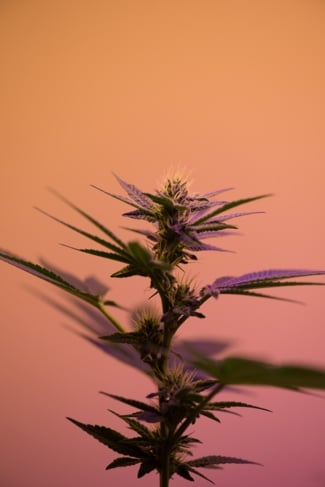
Exercise, meditation, deep breathing, and rest are all ways to handle anxiety, depression, and stress. For some people, so is cannabis. With the legalization of medical cannabis in Canada, more people are turning to this medicinal plant to improve their mental health.
While its use may be widespread and its benefits promising, comprehensive research into the effects of medical cannabis on afflictions of the mind is only just beginning.
“I don’t think we need to spend time looking at whether cannabis might be beneficial for some people; it is,” says M-J Milloy, Canopy Growth professor of cannabis science and assistant professor in the faculty of medicine at the University of British Columbia.
“What we need to have a more even-handed view of is who might it be beneficial for, what kind of dosages might it work best at, and who is it not beneficial for?”
Adding to the challenge of understanding the way medical cannabis affects the brain is that it’s a complex herbal preparation that comes in several different strains and formulations. The two main active compounds are CBD (cannabidiol, the non-psychoactive component) and THC (delta-9-tetrahydrocannabinol, which leads to the feeling of being “high”).
“There are plausible indications that THC and its euphoric qualities could certainly be an effective antidote to acute and chronic stressors that people experience,” Milloy says.
“Whether or not that outweighs the risks that people might experience from using a psychoactive drug: that’s really the task scientists have now, to take the claims and put them to the test.”
Cannabis for mental health—the research
Here’s what some of the early research into the impact of medical cannabis on stress, anxiety, and depression shows.
Cannabis capsules for acute stress relief
Medical cannabis may alleviate anxiety in certain stressful situations. According to a study published in the Brazilian Journal of Psychiatry in 2019, for example, capsules containing 300 mg of CBD helped reduce anxiety in people during a public speaking experience—a known stress-inducing activity.
Inhaled cannabis for depression, anxiety, and stress
Smoking cannabis, meanwhile, can significantly reduce short-term levels of depression, anxiety, and stress but may contribute to worse overall feelings of depression over time. That’s according to a 2018 study by Washington State University (WSU) that examined people’s self-reported feelings of well-being.
Published in the Journal of Affective Disorders, the study found that one puff of cannabis high in CBD and low in THC was optimal for reducing symptoms of depression, while two puffs of any type of cannabis diminished symptoms of anxiety. Ten or more puffs of cannabis high in CBD and high in THC led to the largest reductions in stress.
Participants reported a 50 percent reduction in depression and a 58 percent reduction in anxiety and stress following cannabis use.
Short-term versus long-term effects
The WSU study also found that symptoms of depression <increased> significantly over time and with the number of sessions. The study concludes that “… cannabis may temporarily mask symptoms of negative affect but may not effectively reduce these symptoms in the long term.”
Smoking cannabis comes with risk
While the research points to stress, anxiety, and depression relief from smoking cannabis, this form of ingestion comes with its own health consequences because it directly affects the lungs. This is an area of study that’s on far more solid ground.
“Although studies have not found a link between smoking cannabis and lung cancer, there are clear risks associated with smoking versus other routes of ingestion,” Milloy says. “Canada’s Lower-Risk Cannabis Use Guidelines clearly recommend avoiding smoking over other routes, such as eating.”
Research highlights different effects on males and females
The WSU study also found that although both sexes reported a drop in symptoms of short-term stress, anxiety, and depression related to the use of medical cannabis, women reported a much greater reduction in anxiety.
Indeed, just as with other substances, cannabis affects female and male bodies differently. But when it comes to gender differences around the impact of cannabis use on mental health, findings vary.
For instance, some US research has found an association between depressive symptoms and cannabis use for girls (as well as frequency of cannabis use among men and young men). Other studies, however, suggest no association between depressive symptoms and cannabis use in girls.
Women who experience social anxiety may be more likely to use cannabis than men. In one US study, women reported a desire to use cannabis during a lab-based anxiety-provoking scenario, but the same was not found for male counterparts.
“At a very general level, it is well understood there are important sex and gender differences in cannabis use and effects,” Milloy says. “Unfortunately, to the best of my understanding, there has not been the type of research that would allow us to understand the sex and gender differences in response to cannabis and stress.
“There is so much to learn,” he adds. “We need to figure out what benefits there might be and what the risks are to get a better handle on what the proper role for cannabis might be in clinical settings.”
Strains for mental strain Cannabis sativa and Cannabis indica are the two main types of cannabis used for medicinal purposes. Although scientific research is lacking into how each affects stress, depression, and anxiety, there are some generalities to note.
Indica
These strains often contain higher levels of CBD and lower levels of THC and are sought out for their relaxing effects.
Sativa
Typically, sativas have lower amounts of CBD and higher amounts of THC. They can lead to a creative, energizing effect.
Safe use tips
Medical cannabis affects people differently, and it’s important to reduce the risk of harmful effects. Here’s how.
Know your THC and CBD levels
Products with high THC (the mind-altering component) can lead to dependence or mental health problems, while CBD can counteract some of THC’s psychoactive effects. Consider products with a low THC content or a higher ratio of CBD to THC.
Hold off
The younger you are when you start using cannabis, the greater the chance of serious health problems, such as depression, anxiety, or addiction.
Get help if you need it
Some people who use cannabis may become dependent. If your use is affecting your work, school, social, or family life, seek support.